


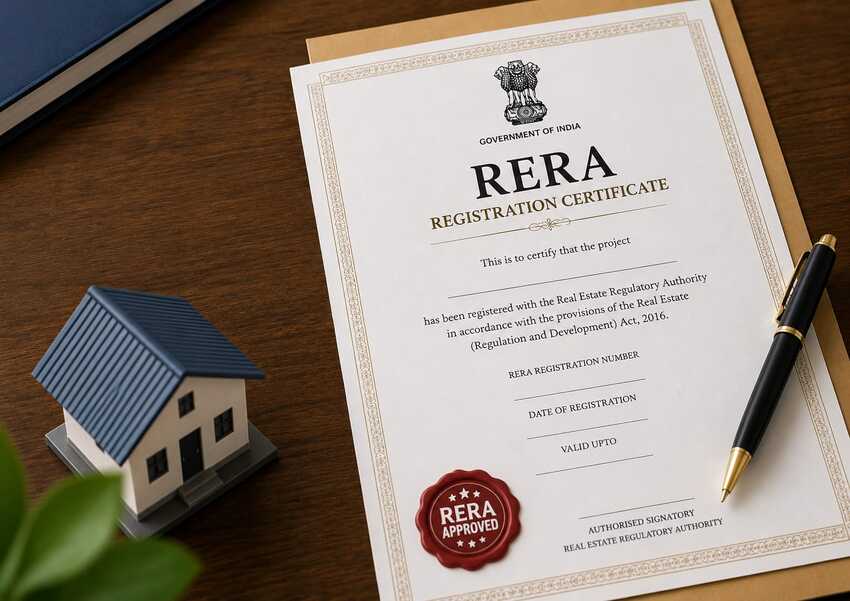
The Real Estate (Regulation and Development) Act, 2016 (RERA) was introduced to promote transparency, accountability and protection for homebuyers.
For a buyer in 2026, checking whether a project is registered under RERA is an important part of the property due-diligence process.
RERA requires registered projects to disclose important information such as project details, sanctioned plans, approvals, developer/promoter information, apartment details and project status through the regulatory framework.
This allows buyers to make a more informed decision before purchasing.
Under RERA, promoters are required to deposit 70% of the amounts realised from allottees into a separate bank account, subject to the requirements of the Act.
These funds are intended to be used for the land cost and construction cost of that particular project, helping reduce the risk of diversion of funds.
RERA places various obligations on promoters relating to project disclosures, construction, compliance and delivery.
This gives homebuyers a stronger regulatory framework and specific remedies in situations covered by the Act.
RERA provides remedies to buyers in situations involving delays or failure by the promoter to meet applicable obligations under the Act and the agreement for sale.
Depending on the circumstances, buyers may have rights relating to refund, interest or compensation, subject to the applicable provisions and orders of the regulatory authority/adjudicating mechanism.
RERA provides a statutory definition of carpet area, making it easier for buyers to compare properties based on the actual usable floor area rather than relying only on super built-up area.
Before making a booking, buyers can check the project's RERA registration number and available project information on the relevant State/UT RERA authority's official website.
This is an important step in verifying the project's registration status and disclosed information.
Whether the property is being purchased for self-use or investment, RERA registration can provide greater transparency regarding the project, promoter, construction status and disclosed project commitments.
However, buyers should still conduct their own independent due diligence.